

The old El Dorado was a city of gold. Conquistadors searched jungles and mountains, chasing a legend that did not exist.
The new El Dorado is real. It is not a place. It is a business model. The multi-sided platform.
Uber does not own cars. Airbnb does not own hotels. Amazon does not own most of what it sells. YouTube does not create videos. Shopify does not own stores. These companies are worth hundreds of billions because they connect two sides of a market. Producers and consumers. Supply and demand. Sellers and buyers.
They do not own the inventory. They own the connection.
This is the most valuable business model of the 21st century. And it is not just for tech giants. Small entrepreneurs are building multi-sided platforms in niche markets. Dog walkers connecting with pet owners. Freelance designers connecting with small businesses. Local farmers connecting with restaurants.
The barriers have never been lower. The opportunity has never been bigger. The new El Dorado is not a place. It is a platform.
Here is how to find yours.
What Is a Multi-Sided Platform?
A multi-sided platform (MSP) creates value by connecting two or more distinct groups of users. The platform does not create the value itself. It enables value exchange between the groups.
Examples you know:
-
Uber: Connects riders (one side) with drivers (the other side).
-
Airbnb: Connects guests with hosts.
-
Amazon Marketplace: Connects buyers with third-party sellers.
-
YouTube: Connects viewers with creators.
-
Upwork: Connects freelancers with clients.
-
Tinder: Connects people with people.
The magic of MSPs:
-
You do not own inventory (low capital costs).
-
You benefit from network effects (more sellers attract more buyers, more buyers attract more sellers).
-
You can scale rapidly (digital platforms scale with software, not headcount).
The challenge of MSPs:
-
The “chicken and egg” problem (you need both sides to attract the other side).
-
You serve two (or more) masters (different needs, different incentives).
-
Trust is critical (bad actors on one side ruin the experience for the other).
Big sized companies who took the lead
From iPod to the ITunes
Introduced in 2001, the iPod was a device where users could store music either by downloading it online or from their CDs. In 2003 a revolution happened: an online store where users could by and store music on their Ipod. It was the birth of iTunes Music.In fact, iTunes was a platform connecting music rights-holders with buyers. 5 years later thanks to the positive market feedback, Apple decided to make it possible for iPhone users to have the iTunes Store integrated with their phones. And thus allowed them to browse, buy and download music directly from iTunes Store and install it on their iPhone.
Google: free & paid; Adwords
The core of google is to provide targeted results from online search. Since advertisers aim to be known ans seen by their target, Google developed a solution for them: Adwords. It is a cloud service displaying ads on both Google’s Search pages and on affiliated content network.Is it not entertaining? Being exactly where your target is usually, in other words Google Adwords bring you close to your target.
Featured

Φ (k) ∝ At
The key raw material that provides a competitive advantage to the people, institutions and geographic locations that hold it, is no longer in the equipment (food, raw materials and energy sources, even if the stakes are high on these subjects, etc.) but in the intangible (information, know-how and knowledge). Knowledge capital can be considered as the third factor of production, in addition to the two more traditional ones: labor, and capital.
Pure physical work, for its part, loses its importance, or at least becomes subcontracted and not strategic, in relation to technical, scientific, organizational and communication skills and the creative and adaptive capacities (theory of human capital). The accumulation mainly relates to knowledge and creativity, that is to say, on the immaterial. We speak in this sense, at the microeconomic level of intellectual capital and “knowledge-value”.
Creating wealth on multi sided-platform
Make money with YouTube
You may be able to make money on YouTube through the following features:
-
Advertising revenue: Get ad revenue from display, overlay, and video ads.
-
Channel memberships: Your members make recurring monthly payments in exchange for special perks that you offer.
-
Merchandise shelf: Your fans can browse and buy official branded merchandise that’s showcased on your watch pages
Monetize on Facebook
Video has taken over Facebook, with daily views on the platform growing four-fold to a whopping four billion in just a year. But until now, video creators haven’t had a way to make money on the platform. Among all the social media channels, Facebook also remains arguably the most lucrative platform in 2018.
In fact, because Facebook’s audience is also maturing (with younger audiences not as eager to hop onboard), Facebook and its user base may also be switching over to a more business-oriented mindset and using the platform more and more as a marketing channel. The company introduced its plan to monetize videos and share the revenue with creators. Facebook’s revenue split with creators is the same as YouTube’s: 55% of the money earned from ads goes to the creator and 45% to Facebook.
Dropshipping
The biggest difference between dropshipping and the standard retail model is that the selling merchant doesn’t stock or own inventory. Instead, the seller purchases inventory as needed from a third party—usually a wholesaler or manufacturer—to fulfill orders.
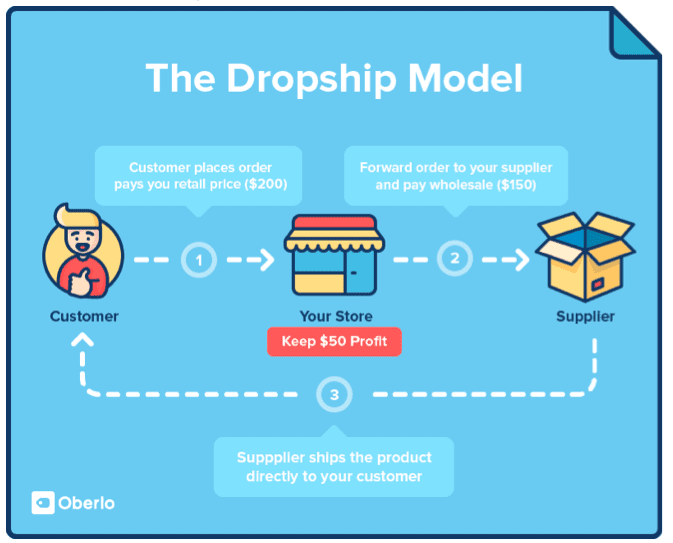
Dropshipping is a way to connect the wholesaler to the consumers. How does is work? Easy, you create an online store, connect it to a wholesaler, choose the products that you would to sell, list them on your website and Voila! You are good to go.
Why Now? The Perfect Conditions for MSPs
Multi-sided platforms are not new. eBay launched in 1995. But conditions have never been better.
Reason 1: Digital infrastructure is free or cheap.
- Stripe handles payments (no banking license needed).
- Cloud hosting (AWS, Vercel, Render) costs pennies.
- No-code tools (Bubble, Adalo, Glide) let you launch without developers.
Reason 2: Trust infrastructure exists.
- Identity verification (SMS, email, social login).
- Reputation systems (reviews, ratings, verification badges).
- Dispute resolution (Stripe Atlas, third-party arbitration).
Reason 3: Niche markets are underserved.
- General platforms (Uber, Airbnb) dominate broad markets.
- Niche platforms (dog walkers, piano teachers, local artisans) are wide open.
- Specialized needs require specialized platforms.
Reason 4: Remote and local both work.
- Remote platforms connect freelancers with clients globally.
- Local platforms connect neighbors with services nearby.
- You can start hyper-local and expand.
The Four Types of Multi-Sided Platforms
Type 1: Marketplace (Product)
What it does: Connects buyers and sellers of physical products.
Examples: eBay, Etsy, Amazon Marketplace, Facebook Marketplace.
Revenue model: Commission per sale, listing fees, promoted listings.
Key metric: Gross Merchandise Value (GMV) = total value of goods sold.
Type 2: Service Marketplace
What it does: Connects buyers and sellers of services.
Examples: Uber, Airbnb, TaskRabbit, Upwork, Fiverr.
Revenue model: Commission per booking, subscription for sellers, service fees.
Key metric: Gross Booking Value (GBV) = total value of services booked.
Type 3: Attention Platform
What it does: Connects content creators with consumers, sells attention to advertisers.
Examples: YouTube, TikTok, Instagram, Twitter, Substack.
Revenue model: Advertising, subscriptions, creator payouts.
Key metric: Time spent, daily active users (DAU).
Type 4: Matching Platform
What it does: Connects two sides for non-commercial or complex matching.
Examples: Tinder, LinkedIn, AngelList, Zillow (connects buyers with agents).
Revenue model: Subscriptions, premium features, lead fees.
Key metric: Successful matches, connections, messages.
The Chicken and Egg Problem (And How to Solve It)
The hardest part of building an MSP is starting. You need supply to attract demand. You need demand to attract supply. You have neither.
Solution 1: Fake supply (temporarily).
- Manually recruit supply side before launching to demand.
- Example: Uber recruited drivers before opening the rider app. They paid drivers to be ready.
- Your version: Recruit 10 piano teachers before you market to students. Offer them free listings for 6 months.
Solution 2: Focus on one side first (usually supply).
- Build supply. Then attract demand.
- Example: YouTube focused on creators before viewers. They paid creators to upload.
- Your version: Recruit 50 dog walkers. Then market to dog owners.
Solution 3: Solve a problem for one side even without the other.
- Give one side value even if the other side is empty.
- Example: OpenTable gave restaurants free reservation software before diners used it.
- Your version: Give piano teachers free scheduling software. Then add student search.
Solution 4: Start in a closed, small market.
- Launch in one city (not nationwide).
- Example: Uber launched in San Francisco only.
- Your version: Launch in your zip code. Then expand.
The Network Effects Flywheel
Network effects are the secret sauce of MSPs. More supply attracts more demand. More demand attracts more supply. The platform becomes more valuable as it grows.
Same-side network effects: More piano teachers attract more piano teachers (they share tips, build community). More students attract more students (they share recommendations).
Cross-side network effects: More teachers attract more students (more choice). More students attract more teachers (more customers).
How to accelerate network effects:
- Reduce friction for joining (one-click signup, free trial).
- Reduce friction for transacting (easy payments, messaging).
- Build reputation systems (ratings, reviews, verification).
- Incentivize referrals (give credits for inviting others).
- Focus on liquidity (speed of matching). A student should find a teacher in minutes, not days.
The Five Pillars of a Successful Multi-Sided Platform
Pillar 1: Solve a Real Problem for Both Sides
If only one side benefits, the platform will not work.
Example: Piano teachers struggle to find students. Parents struggle to find teachers. Your platform solves both problems.
Test: Talk to 10 people on each side. “What is your biggest frustration with finding [supply/demand] today?” If they have a strong answer, you have a problem worth solving.
Pillar 2: Build Trust Through Reputation
Platforms without trust fail. Buyers need to trust sellers. Sellers need to trust buyers.
Trust features:
- Verified profiles (SMS, email, ID upload).
- Ratings and reviews (after each transaction).
- Messaging (keeps communication on platform).
- Dispute resolution (process for complaints).
- Insurance or guarantees (for high-value transactions).
Pro tip: Start with manual verification. Review every seller profile before they go live. It does not scale, but it builds trust in the early days.
Pillar 3: Reduce Friction to Zero
Every click, every form field, every waiting moment loses users.
Friction killers:
- One-click signup (Google, Apple, Facebook login).
- Saved payment methods (no retyping credit cards).
- In-app messaging (no switching to text or email).
- Auto-filled location and preferences.
- Push notifications (not email) for time-sensitive updates.
Pro tip: Watch someone use your platform. Do not help. Count every click and every moment of confusion. Remove what you can.
Pillar 4: Take a Cut That Feels Fair
You need revenue. But taking too much will drive users away.
Revenue models for MSPs:
- Commission (5–20% of transaction value).
- Subscription ($10–$50/month for supply side).
- Listing fees ($1–$10 per listing).
- Featured placement ($50–$500/month for top visibility).
- Lead fees ($5–$50 per qualified lead).
What percentage is fair?
- High-volume, low-value transactions (Uber): 20–30%.
- High-value, low-volume transactions (real estate): 5–10%.
- Subscription-based: Fixed fee, not percentage.
Pro tip: Start with lower fees to attract users. Raise fees as you provide more value. Uber started with 0% commission to attract drivers.
Pillar 5: Measure the Right Metrics
Vanity metrics (total users, total downloads) do not matter. Liquidity metrics do.
The metrics that matter:
- Liquidity: What percentage of supply is matched with demand within [time period]?
- Match rate: What percentage of searches result in a booking?
- Time to match: How long between a user joining and their first transaction?
- Repeat rate: What percentage of users transact more than once?
- CAC (Customer Acquisition Cost): How much to acquire a user on each side?
- LTV (Lifetime Value): How much revenue does a user generate over their lifetime?
Healthy MSP metrics:
- LTV > 3x CAC.
- Repeat rate > 30% (supply), > 20% (demand).
- Time to match < 1 day (for local services), < 1 hour (for on-demand).
A Real-World Example: The Niche Platform That Beat the Giants
A founder named Marcus built a platform for connecting RV owners with people who wanted to rent RVs. General platforms (Airbnb, Outdoorsy) already existed.
Marcus won anyway. Here is how.
Pillar 1 (Problem): RV owners struggled to find renters during weekdays (not weekends). Renters wanted cheaper weekday rates. Marcus built “Weekday Warrior” platform. RV owners list weekdays only. Renters get 50% off.
Pillar 2 (Trust): Marcus added GPS tracking on every RV. Owners could see where their RV was at all times. Renters had to watch a safety video before booking.
Pillar 3 (Friction): One-click insurance included in every booking. Renters did not need to buy separate policies. Owners did not need to verify coverage.
Pillar 4 (Revenue): 10% commission. Lower than competitors (15–20%). Owners flocked to Marcus.
Pillar 5 (Metrics): Marcus focused on weekday liquidity. Within 6 months, 80% of weekday inventory was booked. Weekend inventory followed.
Within 18 months, Marcus had 10,000 RVs and $5 million in annual revenue. He sold the platform for $15 million.
He did not build a better general platform. He built a better niche platform.
How to Start Your Multi-Sided Platform (Today)
Step 1: Choose your niche.
Not “marketplace for services.” But “marketplace for piano teachers in Austin, TX.”
Step 2: Talk to both sides.
Interview 10 potential supply. Interview 10 potential demand. Do they have the same problem? Do they want a solution?
Step 3: Solve the chicken and egg.
Recruit supply manually. Offer free listings. Pay them if you have to. Then attract demand.
Step 4: Build the simplest possible platform.
Use a no-code tool (Bubble, Glide, Softr). Do not code from scratch. Do not build features you do not need.
Step 5: Facilitate the first transactions manually.
Be the platform. Match supply and demand yourself. Send emails. Make calls. Learn what breaks.
Step 6: Automate only what users actually use.
After 50 manual transactions, you will know what features matter. Build those. Ignore the rest.
Step 7: Measure liquidity, not users.
Are matches happening? Are transactions completing? If not, fix matching and trust before adding users.
Frequently Asked Questions (FAQ)
How much does it cost to build a multi-sided platform?
$0–$500 using no-code tools for an MVP. $5,000–$50,000 for a custom platform. Start with no-code.
Do I need venture capital?
No. Many MSPs start as side projects. Revenue funds growth. VC is for scaling, not starting.
What is the biggest risk?
The chicken and egg problem. Solve it by focusing on one side first and facilitating manual matches.
Can I build a platform without technical skills?
Yes. No-code tools (Bubble, Adalo, Glide) let you build functional marketplaces without code. Start there.
How do I prevent bad actors?
Manual verification for supply side. Reviews for both sides. Dispute resolution process. Insurance for high-value transactions.
The Bottom Line
The new El Dorado is not a place. It is a model. The multi-sided platform.
You do not need to own inventory. You need to own the connection.
- Uber does not own cars.
- Airbnb does not own hotels.
- YouTube does not own videos.
- Shopify does not own stores.
Find a niche. Connect supply and demand. Solve the chicken and egg. Build trust. Reduce friction. Measure liquidity.
The gold rush is not over. It has just moved from physical mines to digital platforms. The pickaxes are no-code tools. The maps are network effects.
Your El Dorado is out there. A group of producers struggling to find customers. A group of customers struggling to find producers. Build the bridge between them.
That is the new El Dorado. Go claim it.
Ready to build your multi-sided platform? Share this post with a fellow entrepreneur who needs to see it. And subscribe to our newsletter for more platform business strategies every Tuesday.