Let me tell you about the boutique hotel that lost $500,000 because of a slow booking button.
A small hotel in Charleston had a beautiful website. Gorgeous photography. Charming copy. A perfect brand.
But their booking button was orange. And it took four seconds to load.
Four seconds does not sound like much. But in the hotel industry, every second of load time loses 10-15% of bookings. For this hotel, that meant hundreds of lost reservations per month.
A consultant ran a test. He changed the button to green (no other changes). He optimized the load time from four seconds to two seconds.
Bookings increased by 22% in thirty days. That was over $500,000 in annual revenue. From a button color and two seconds.
Hotel websites are not art projects. They are revenue engines. Every decision either prints money or loses it.
The One Question That Drives Everything
Before you design a single page, answer this:
What does a guest feel the moment before they book?
Not think. Feel.
-
Relief? (“Finally, a weekend away.”)
-
Excitement? (“I cannot believe this view.”)
-
Indulgence? (“I deserve this.”)
-
Urgency? (“Only one room left!”)
Your entire website should be engineered to create and amplify that feeling. Photography, copy, colors, layout, button text—all of it serves the emotion.
If you do not know what emotion you are selling, you are just posting photos of beds.
The Five Essential Elements of a High-Converting Hotel Website
1. Hero imagery that stops the scroll.
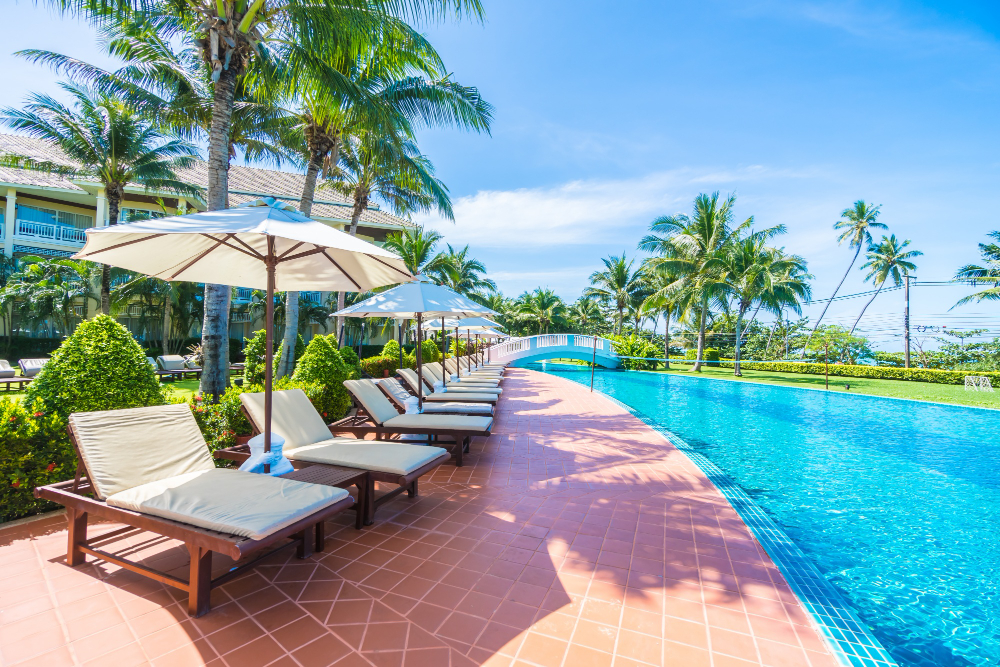
Not a slideshow. Not a video montage. One, single, breathtaking image that captures the feeling of being there. The sunset from the balcony. The pool at golden hour. The breakfast spread with morning light.
Professional photography is not optional. It is the most important investment you will make. Amateur phone photos tell guests “this place is cheap.” Professional photos tell guests “this place is magic.”
2. A booking engine that is impossible to miss.
The booking form should be visible without scrolling. On every page. In a high-contrast color. With the dates pre-filled to today and tomorrow (saves clicks).
Do not make guests hunt for the “book now” button. Do not hide it in a menu. Do not make them click through three pages to see availability. Put it in their face immediately.
3. Social proof that silences doubt.
TripAdvisor rating. Google review score. A quote from a recent guest. A badge that says “Voted Best Boutique Hotel 2024.”
Travelers are anxious. They are afraid of making a mistake. Show them that others have booked, stayed, and loved it. Prove that you are not a disappointment.
4. A clear value proposition above the fold.
One sentence that answers: “Why should I book here instead of the other twenty hotels?”
-
Bad: “Luxury accommodations in the heart of the city.”
-
Good: “Five blocks from the convention center. Free breakfast until 11 AM. Cancellation up to 24 hours before check-in.”
Specific beats vague. Real beats poetic.
5. Room photos that tell the truth (and then a little more).
Show the bed. Show the bathroom. Show the view from the window. Show the tiny desk where someone might work. Show the coffee maker.
Do not use wide-angle lenses that make rooms look twice their actual size. Guests will feel lied to when they arrive. That is how you get a one-star review.
Do show the room styled warmly. A book on the nightstand. A blanket folded at the foot of the bed. A cup of tea on the table. These details whisper “someone cares about this place.”
What to Remove Immediately
Hotel websites are famous for clutter. Delete these things.
Delete the homepage video. Autoplay videos slow your site and annoy guests. A single stunning image works better.
Delete the map that takes up half the page. Put the address in text. A small map is fine. A giant map is a distraction.
Delete the long list of amenities. Nobody reads “luxury bath products, premium linens, blackout curtains.” Put those on the room page. Keep the homepage clean.
Delete the newsletter pop-up on arrival. Nothing kills a booking faster than “SIGN UP FOR OUR NEWSLETTER” before they have even seen a room. Ask after they book or not at all.
Delete the social media feed. Instagram photos of other people’s vacations do not sell your hotel. They send guests away.
The Mobile Crisis (And How to Fix It)
Over 60% of hotel bookings start on a mobile phone. Most hotel websites are unreadable on mobile.
Test your site on an iPhone right now:
-
Can you see the booking form without pinching and zooming?
-
Is the “check-in” date picker easy to use with a thumb?
-
Does the phone number link so you can tap to call?
-
Does the site load in under three seconds?
If the answer to any of these is no, you are losing bookings every single day.
Mobile optimization is not optional. It is survival.
The Booking Path: Count the Clicks
A guest should be able to go from homepage to “booking confirmed” in three clicks or less.
Click 1: Homepage → Click “Book Now”
Click 2: Select dates and room type
Click 3: Enter payment and confirm
That is it. Every extra click loses 10-15% of guests.
Count your clicks right now. If it takes more than three, simplify. Remove unnecessary questions. Stop asking for their mailing address. Stop asking how they heard about you. Stop asking for a credit card security code on a separate page.
Fewer clicks = more bookings.
A Real-World Example: The Inn That Doubled Bookings by Removing Text
A small inn in Vermont had a homepage with 847 words of text. They described their history, their philosophy, their sustainable farming practices, and their grandmother’s recipe for scones.
A consultant told them to delete everything except:
-
One hero photo (the mountain view at sunrise)
-
One sentence (“Cozy inn on twenty acres. Fireplaces in every room.”)
-
One button (“Check Availability”)
-
One social proof badge (“TripAdvisor Travelers’ Choice 2024”)
They deleted 840 words. Bookings doubled in sixty days.
The history was important to the owners. The guests did not care. They wanted a fireplace and a view. That was it.
The Bottom Line
A hotel website is not a brochure. It is not a scrapbook. It is not a love letter to your property.
It is a booking machine.
Every element must either:
-
Make the guest feel the emotion of being there (hero image, copy)
-
Make it easy to book (visible form, few clicks)
-
Or get out of the way
Design for the tired, overwhelmed traveler who has been searching for two hours. They have twenty tabs open. Their eyes are glazing over. They are one frustrating experience away from booking the chain hotel down the street.
Be the website that catches them. Give them a stunning image. Give them a simple form. Give them proof that others loved it. Give them a button that works on the first tap.
And then get out of the way and let them book.
That is not design. That is hospitality. And hospitality is what you are actually selling. Not rooms. Not beds. Not breakfast.
A feeling. Sell the feeling first. The booking will follow.